

A blueprint for preventive & predictive living

A home that knows itself
before it asks anything of you.

The Certified Home™ is a quiet rebellion against reactive ownership. We replace surprise repairs and end-of-life failures with a documented, sensed, and certified home — one that warns you long before it breaks, and ages with grace because every system was watched, logged, and loved.

  • 7 Certified systems
    per home
  • 365 Days of continuous
    telemetry
  • 1 Living document
    of record
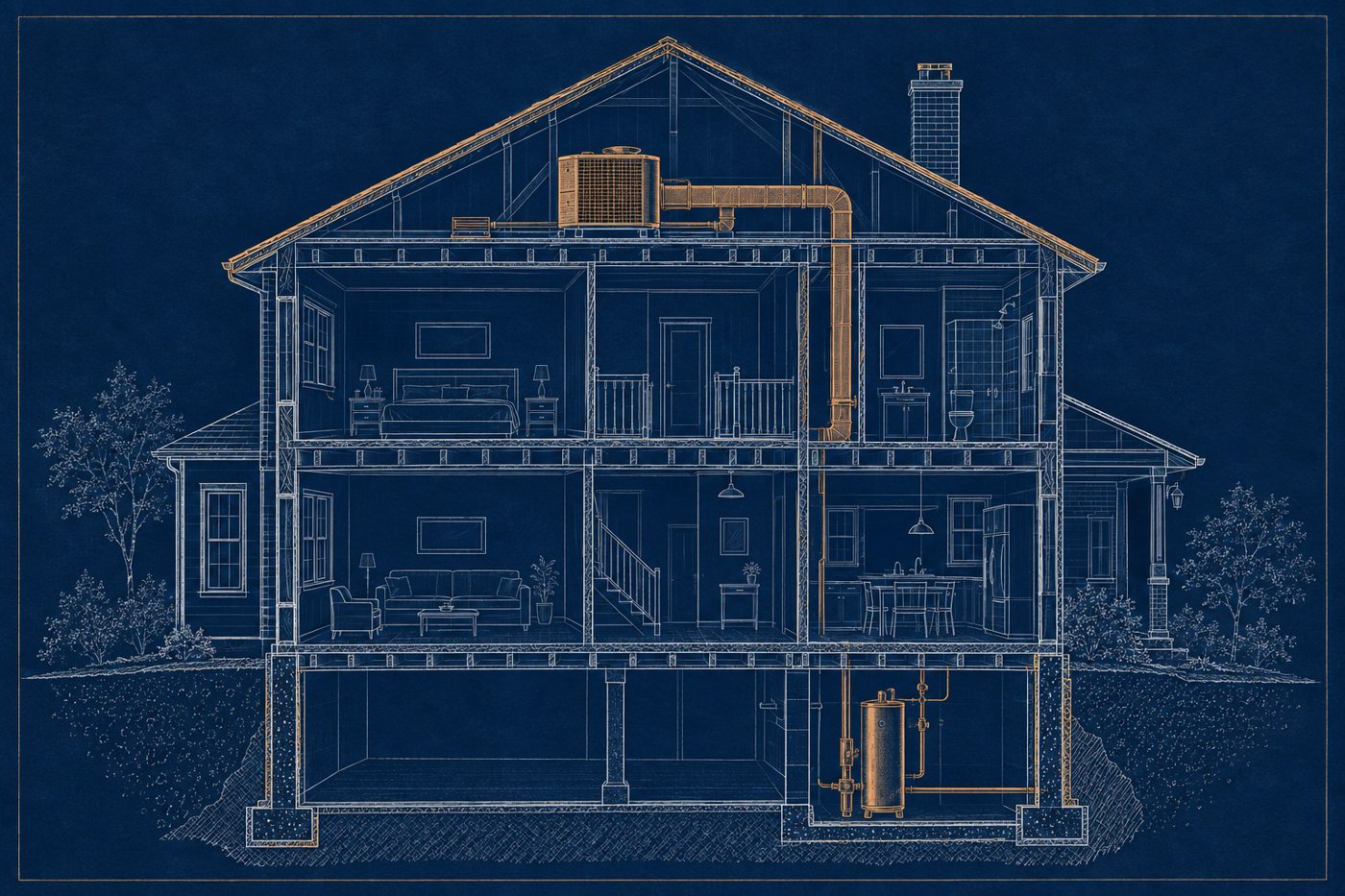
Architectural cross-section illustration of a Certified Home, drawn in the style of a blueprint with the roof, HVAC, water heater, and foundation highlighted in copper.
Plate I  ·  The Certified Home, cross-sectional study

01  —  The Premise

Most homes are run on emergencies. Ours shouldn't be.

The American home is the most expensive asset a family will ever own, and the least documented. We track our cars with maintenance schedules, our bodies with annual physicals, our investments to the basis point — and then we let a 30‑year roof, a 12‑year water heater, and a 22‑year furnace coexist under the same roof, untracked, until one of them fails on a Tuesday in February.

The reactive home

Lives one failure at a time. Repairs are emergencies. Knowledge leaves with the previous owner. Value depreciates quietly. Insurance is a guess.

The Certified Home

Lives on a schedule. Repairs are appointments. Every system has a birthday, a service log, and a successor planned. Value compounds.

A certified home is not a smarter house. It is a better-kept house — one whose owner has chosen to know what they own.

02  —  Two Pillars

Preventive is the discipline. Predictive is the signal.

The Certified Home stands on two practices working together. One is patient and scheduled. The other is constant and quiet. Most homes have neither. Yours will have both.

Still life of a brass key, leather maintenance log, magnifying glass, and cedar branch on warm parchment linen — symbols of preventive home stewardship.

Pillar I

Preventive

The ledger, the calendar, and the inspection.

Preventive work is the unsexy half of stewardship: the seasonal walk-around, the annual HVAC service, the gutter cleaned before October, the dryer vent purged before it smolders. It is boring on purpose. It is also where 80% of catastrophic home losses are quietly avoided.

  • Annual physical. A documented, dated walkthrough of every certified system.
  • Service ledger. Every contractor, every part, every receipt, in one searchable record.
  • Replacement plan. Each system has a known remaining service life and a budgeted successor.
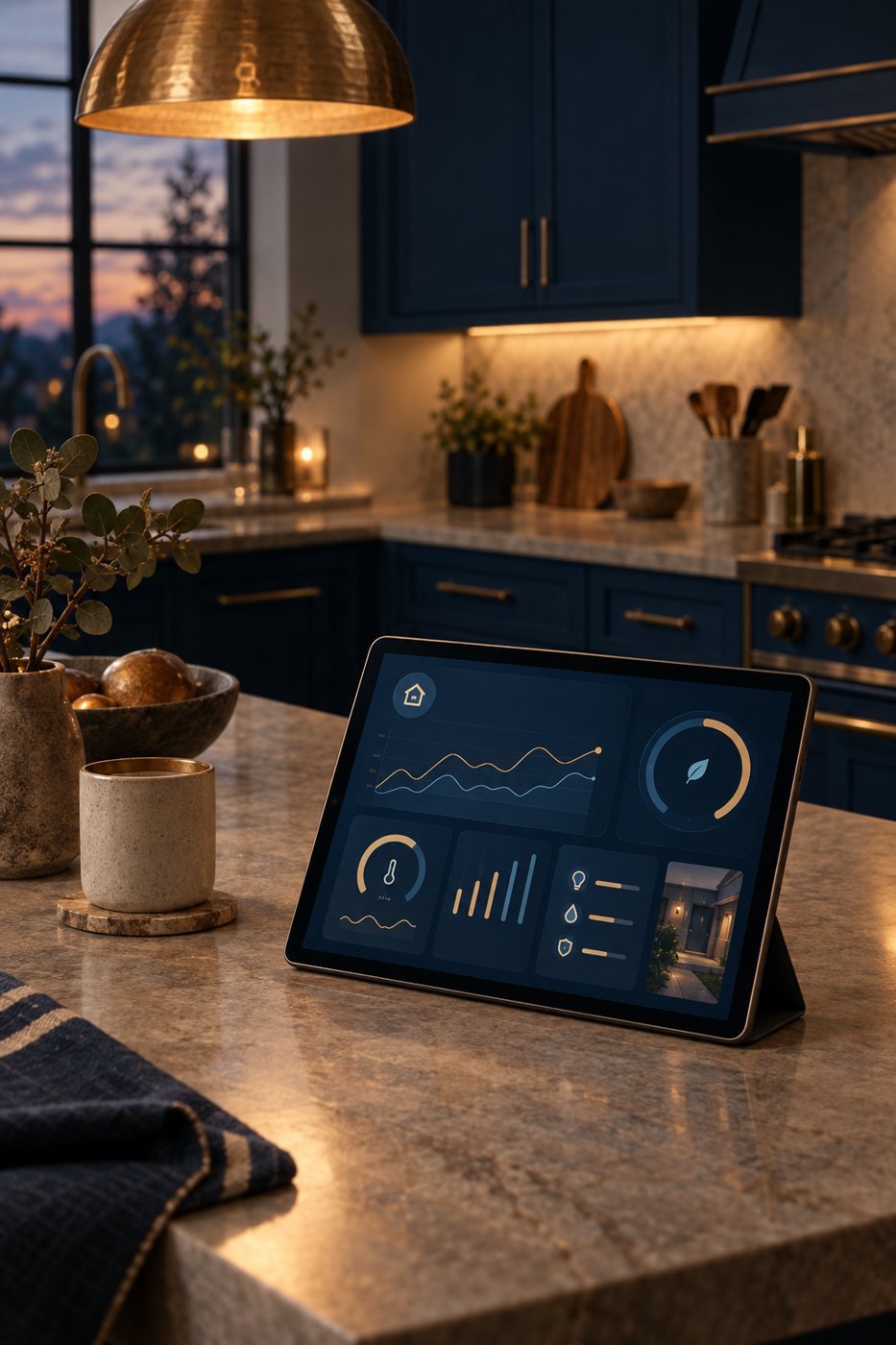
A dimly glowing home monitoring dashboard on a tablet resting in a calm modern kitchen at dusk — the quiet signal layer of a Certified Home.

Pillar II

Predictive

The sensors, the trend lines, the early warning.

Predictive work is what modern instrumentation finally makes possible at the residential scale. A water sensor under the dishwasher. A current clamp on the AC condenser. A pressure transducer on the main line. Each one is mundane in isolation; together they form a nervous system that notices the small change three weeks before the failure.

  • Always-on telemetry. Water, power, temperature, humidity, vibration, air quality — logged continuously.
  • Anomaly thresholds. Each system has a "normal" envelope; deviation triggers a notice, not an emergency.
  • Drift detection. The pump that took 4 seconds to prime last spring and 11 seconds this spring is not yet broken — but it is talking.

03  —  The Framework

Seven systems. One certified house.

Every home, regardless of age or size, is reducible to seven systems. The Certified Home™ covers each one with a baseline assessment, a maintenance cadence, and a predictive signal.

  1. I.

    Envelope

    Roof, siding, windows, doors, insulation. The shell that decides whether weather stays outside.

  2. II.

    Structure & Foundation

    Footings, framing, grading, drainage. The bones; the most expensive thing to ignore.

  3. III.

    Water

    Supply, drainage, water heater, fixtures. The system most likely to fail catastrophically — and most easily sensed.

  4. IV.

    Climate

    HVAC, ductwork, ventilation, humidity. Comfort, air quality, and your largest recurring utility cost.

  5. V.

    Electrical

    Service panel, circuits, grounding, backup. Invisible until it isn't; instrumentable down to the breaker.

  6. VI.

    Safety

    Smoke, CO, radon, security, fire suppression. Non-negotiable. Tested on a calendar, not a memory.

  7. VII.

    Grounds & Site

    Drainage, trees, hardscape, soil. The part of the home most people forget is part of the home.

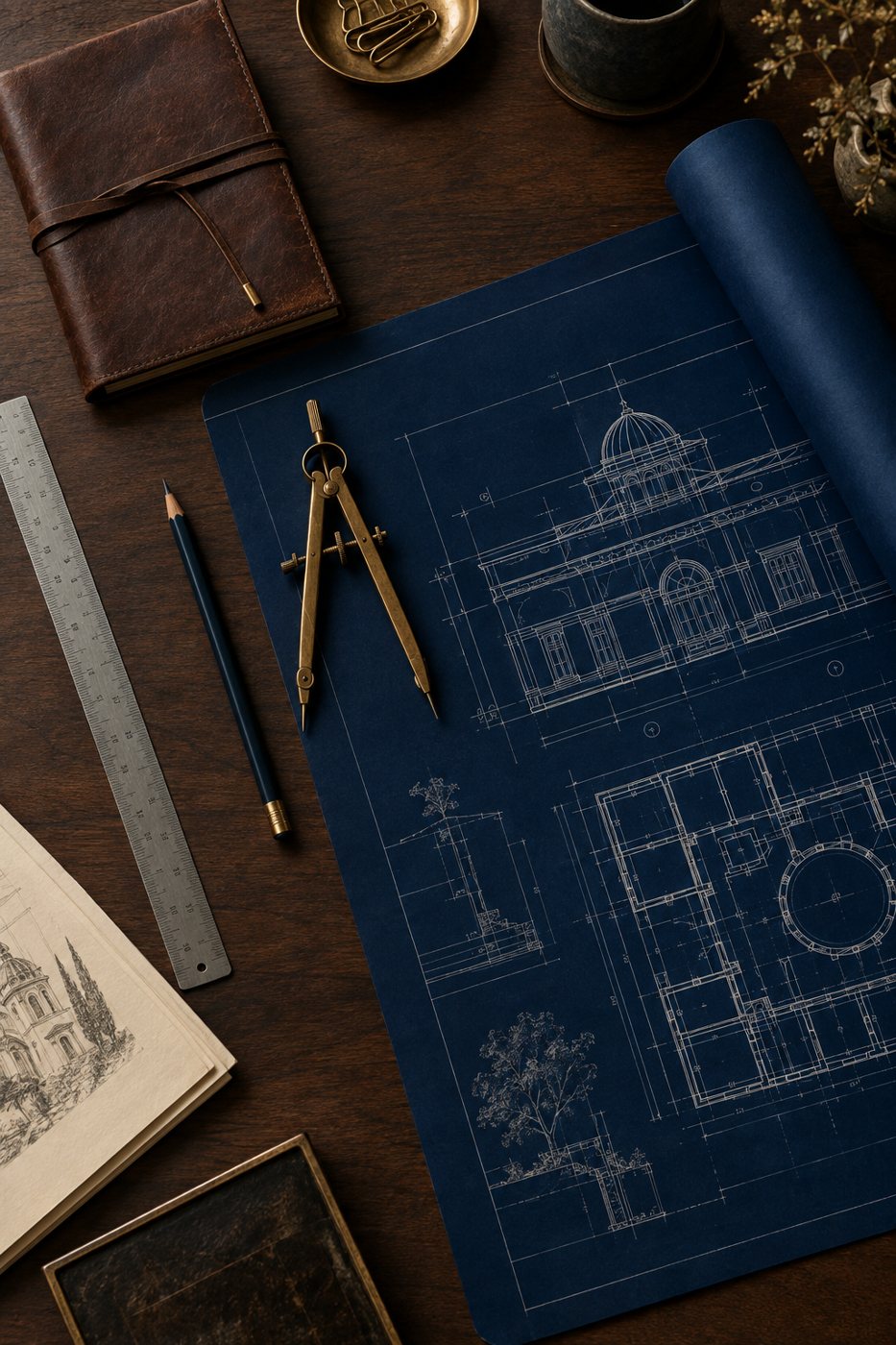
Architectural workspace: brass compass, pencil, ruler, leather journal, and a partially unrolled deep-navy blueprint with fine white linework — the tools of certifying a home.
Plate II  ·  The instruments of certification

04  —  The Process

How a home becomes certified.

Certification is not a stamp. It is a relationship the home has with itself — and a document the next owner inherits.

  1. 01

    Baseline

    A full-day, room-by-room, system-by-system assessment. Every component photographed, dated, and graded on a remaining-life scale. The house gets a birthday for every system it owns.

  2. 02

    Instrument

    A modest, deliberately boring sensor layer is installed where it matters most: at the main water line, the panel, the water heater, the attic, and the critical drains. Nothing is showy. Everything is logged.

  3. 03

    Cadence

    Each of the seven systems is placed on a maintenance calendar — annual, semi-annual, or seasonal — and tied to a contractor, a checklist, and a budget line.

  4. 04

    Steward

    The home is reviewed each spring and fall. Telemetry is read against thresholds. The plan is updated. Replacements are scheduled, not surprised. Certification is renewed.

05  —  Who this is for

If any of these sound like you, we should talk.

The first-time owner

You bought a home and inherited a stack of paperwork and no idea when anything was last serviced. You want a clean starting line.

The long-tenured owner

You have lived in your home for 15+ years. You know it intimately — and you also know there are things you have been quietly putting off for a decade.

The aging-in-place family

This is the home that has to last another 30 years. You cannot afford a surprise. You want it documented for the next generation.

The selling owner

A certified, documented home appraises differently, inspects differently, and sells differently. You want a buyer to compete, not flinch.

06  —  Join the Project

Begin a quieter relationship with your home.

The Certified Home™ is taking on a small number of new homes each season. We start with a baseline assessment and a conversation, not a contract.

No spam. No mailing list. One reply from a person who reads it.